- All
- Product Name
- Product Keyword
- Product Model
- Product Summary
- Product Description
- Multi Field Search


Views: 0 Author: Site Editor Publish Time: 2026-11-11 Origin: Site
| Section | Summary |
|---|---|
| What are scent beads used for? | Explains the role of laundry scent beads and how they differ from cleaning products. |
| Where do you put scent beads? | Shows the correct drum placement and why the detergent drawer is usually unsuitable. |
| How much scent beads should you use | Provides a practical dosage method based on load size and fragrance preference. |
| Step by step laundry method | Gives a complete sequence from sorting and measuring to drying and storage. |
| Can scent beads be used with detergent? | Clarifies how beads work with liquid, powder and sheet detergents. |
| Water temperature and dissolving time | Reviews the 10°C to 60°C range and factors that affect dissolution. |
| Which fabrics can use scent beads? | Discusses cotton, synthetic fabrics, delicates, towels and technical textiles. |
| Common mistakes and safety points | Lists incorrect placement, overuse, storage and unsupported claims to avoid. |
| How businesses should evaluate scent beads | Offers a B2B checklist for samples, packaging, fragrance, testing and supply. |
Scent beads are used to add fragrance to washed clothes, bedding and other washable textiles. They are concentrated in wash fragrance products, not primary cleaners. Detergent removes soil, body oils and stains, while the scent beads provide a fragrance layer that can remain after the cycle and drying process.
The product information reviewed for this article describes small beads that dissolve evenly in water from 10°C to 60°C within approximately five minutes. It also describes a slow release formula intended to keep fabrics fresh through multiple washes and wear cycles. Actual results depend on formula, dosage, fabric structure, water conditions, drying and storage.
For a household user, scent beads can provide a repeatable fragrance routine without spraying perfume onto dry clothes. For a retailer or private label buyer, the bead format allows different scent profiles, packaging formats and usage instructions to be developed around a common laundry concept.
| Product role | What it contributes | What it does not replace |
|---|---|---|
| Fragrance | Adds scent during washing. | Detergent cleaning chemistry. |
| Fabric experience | Can improve perceived freshness. | Fabric softener conditioning. |
| Odor perception | Can help cover mild residual odors with fragrance. | Cleaning of mold, oil or heavy contamination. |
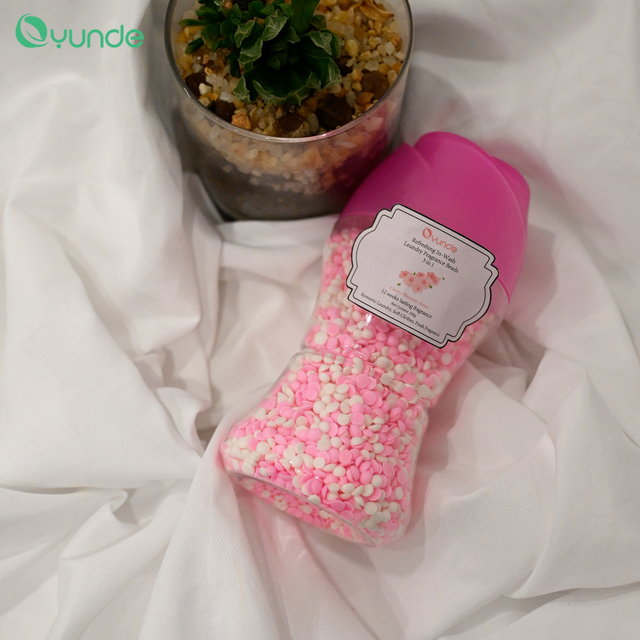
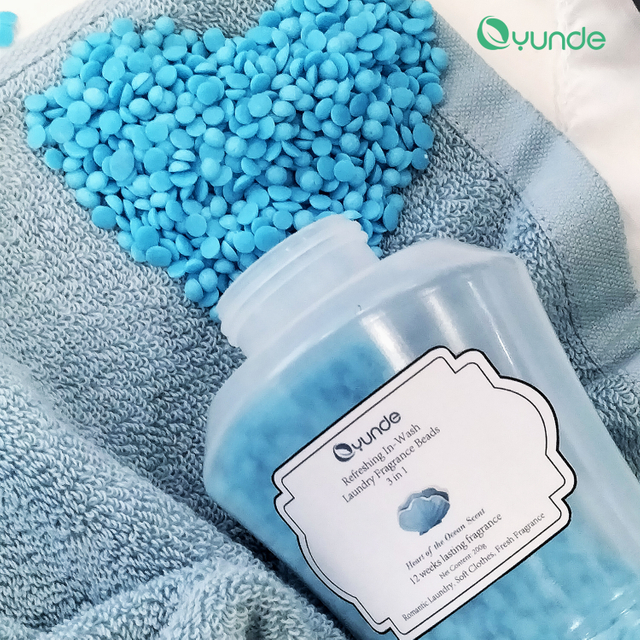
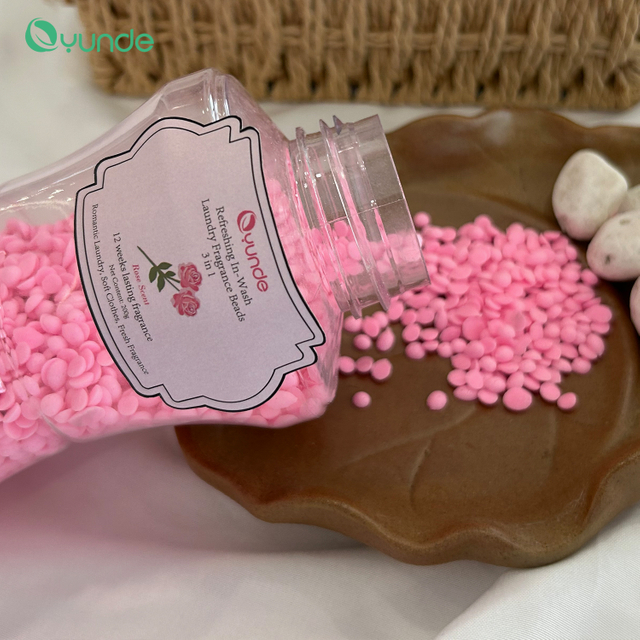
Buyers comparing fragrance formats can review the laundry scent bead product collection to assess scent options, packaging direction and intended use.
Put scent beads directly into the empty washing machine drum before loading laundry. The drum is the most reliable location because the beads meet incoming water at the beginning of the cycle. This supports even distribution and reduces the chance of product remaining in a dispenser compartment.
Do not normally put scent beads in the detergent drawer or fabric softener compartment. The detergent compartment is designed for liquid, powder or sheet dosing, while the softener compartment releases its contents later during the rinse. Scent beads are intended for the wash stage, so the release timing is different.
Do not pour a concentrated pile onto one delicate garment. Add the measured amount to the drum and then distribute clothes normally. If a product label gives another method, follow that label and make sure the instruction has been validated for the specific formulation and machine type.
| Machine location | Use for scent beads | Reason |
|---|---|---|
| Empty drum | Recommended starting location. | Direct contact with wash water. |
| Detergent drawer | Usually avoid. | May retain product or release it at the wrong time. |
| Softener compartment | Usually avoid. | Designed for rinse stage products. |
| Dryer | Avoid unless label permits. | Heat exposure may be untested. |
Use the smallest amount that produces the fragrance level you want after the clothes are dry. Dosage is influenced by load size, fabric density, fragrance concentration, water hardness, cycle time and drying. A small load of thin garments needs less product than a full load of heavy cotton or bedding.
For first use, start with the package recommendation. If you are comparing samples, use a low, standard and high dose within the permitted range. Wash identical loads under the same conditions and compare the scent after drying and after storage. This creates a more useful reference than changing several variables at once.
Adding extra beads can make fragrance overpowering, raise cost per wash and increase the possibility of incomplete dissolution in a short or cold cycle. If beads remain visible, investigate drum loading, water movement, temperature and cycle duration before increasing the dose.
| Load condition | Practical starting approach | Reason |
|---|---|---|
| Small load | Use a lower measured amount. | Prevents unnecessary fragrance intensity. |
| Full everyday load | Use the standard package amount. | Matches the normal fabric surface. |
| Bulky bedding | Increase only after testing. | Dense fabrics can retain more scent. |
| Sensitive user | Choose a light profile and low dose. | Reduces exposure to strong fragrance. |
A reliable method is to sort the laundry, measure the beads, add them to the empty drum, load clothes, add detergent and select the correct cycle. First check care labels, empty pockets and separate colors. Avoid overfilling because water movement affects dissolution and rinsing.
Evaluate the result when fabrics are dry. Damp textiles can temporarily make fragrance appear stronger. The dryer, air drying method, storage bag and room temperature can all change the final perception, so a commercial test should keep these conditions consistent.
Yes, scent beads should normally be used with detergent because they add fragrance rather than provide complete cleaning. Liquid detergent and powder detergent go into their normal compartments or the drum according to their own instructions. Detergent sheets may be placed where the sheet manufacturer specifies. Scent beads remain in the empty drum.
Do not assume that the strongest combined fragrance is the best result. Detergent, softener and beads may have different perfume profiles that clash. When developing or sourcing a product, test it with the detergent fragrances common in the target market. This is especially relevant for private label programs and hospitality laundry.
Fabric softener is a separate product with a conditioning function and a different dispensing stage. It may be used with scent beads when the fabric allows it and the labels permit the combination. Towels, microfiber and technical clothing require extra testing because conditioning ingredients can alter absorbency or moisture management.
| Product | Primary purpose | Normal location |
|---|---|---|
| Detergent | Cleaning and soil removal. | Detergent drawer or drum as directed. |
| Scent beads | In wash fragrance. | Empty drum before clothes. |
| Fabric softener | Conditioning and static control. | Softener dispenser. |
| Stain remover | Targeted stain treatment. | As specified by the product label. |
Temperature, water movement and cycle duration all affect how scent beads dissolve. The product information reviewed for this article describes an operating range of 10°C to 60°C and dissolution within approximately five minutes. Cold cycles can still work, but they should be tested with the actual machine, load and cycle time.
A heavily packed drum, low water intake or very short program can limit contact between the beads and water. If the product is being evaluated for several countries, include the cold economy programs that customers commonly use. Also check package sealing and storage humidity because damp beads may not flow or dissolve as expected.
| Condition | What to monitor | Practical question |
|---|---|---|
| Cold wash | Visible residue and dissolution speed. | Does the product perform at the lowest target temperature? |
| Warm wash | Fragrance release and fabric result. | Is this the main customer program? |
| Short cycle | Time available for dissolution and rinsing. | Should the user select a longer cycle? |
| Humid storage | Flow, clumping and package condition. | Is the packaging moisture resistant? |
Scent beads can be considered for cotton, synthetics and selected delicates, but the fabric care label and end use should guide the decision. The product category describes compatibility with cotton, synthetic fabrics and delicates without affecting softness or color vibrancy. For commercial claims, those statements should be checked through repeated wash tests on representative fabric samples.
Cotton shirts, bedding and household linens are practical starting points. Buyers can compare laundry scent bead formulas for different fabrics through repeated wash and storage tests. Synthetic sportswear should be checked for elasticity, printed graphics, odor interaction and moisture management. Towels and microfiber should be tested for absorbency because excessive additives can change how water moves through the fibers.
Use a low dose and gentle cycle for delicate fabrics. For water repellent, flame resistant or coated textiles, follow the textile maker's instructions before adding any fragrance product. The objective is to add a pleasant scent while preserving the main performance of the textile.
| Fabric | Recommended evaluation | Point to check |
|---|---|---|
| Cotton | Compare fragrance after drying and storage. | Colorfastness and persistence. |
| Synthetic sportswear | Run repeated cycles with suitable detergent. | Elasticity, prints and moisture control. |
| Delicates | Use low dose and gentle program. | Care label and color stability. |
| Towels and microfiber | Measure absorbency after use. | Residue and water uptake. |
Most scent bead problems result from incorrect placement, excessive dosing, poor machine maintenance or unsupported product expectations. The fragrance should not be used to hide mold, heavy oil contamination or a dirty washing machine. Clean the machine and use a detergent and treatment suitable for the source of the soil.
B2B buyers should evaluate scent beads as a complete product system that includes formula, fragrance, packaging, instructions and quality control. Request samples in the intended package format and test them at the lowest target temperature. Compare fragrance after drying, after storage and after repeated washes on typical fabrics.
Packaging should protect beads from humidity and allow accurate dosing. The label should state where to add the product, how much to use, how to store it and what claims are supported. If a buyer wants a custom scent or private label range, approve a reference sample and define batch consistency before ordering in volume.
The private label laundry scent bead options can be evaluated when a distributor needs several fragrance directions, customized packaging or a wholesale supply plan. Supplier review should also include minimum order quantity, lead time, technical documents, artwork support and change control.
| Buying factor | Evidence to request | Reason |
|---|---|---|
| Dissolution | Cold, warm and short cycle results. | Reduces residue risk. |
| Fragrance | Samples and stability information. | Supports a clear scent position. |
| Packaging | Seal, material and dose format. | Protects product in storage and transport. |
| Compliance | Ingredient, allergen and safety files. | Supports accurate market labeling. |
| Supply | MOQ, lead time and batch records. | Improves commercial planning. |
To use scent beads in laundry, add a measured amount to the empty drum before clothes, use detergent separately and choose a cycle that matches the fabric. Correct placement helps the beads dissolve and distribute through the wash. Load size, water temperature, drum movement, fabric type and drying all affect the final fragrance.
For regular laundry, start with a modest dose and adjust only within the product instructions. For B2B buyers, validate performance between 10°C and 60°C, check the stated dissolving time, evaluate fragrance persistence, and confirm fabric compatibility and packaging stability before commercial launch.
Final checklist: sort the laundry, measure the beads, add them to the empty drum, use normal detergent, avoid overloading, test cold programs, clean the machine and keep product claims tied to verified performance.